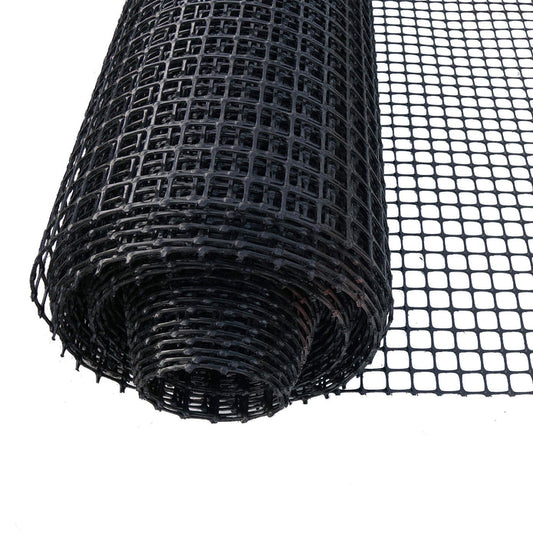
Reinforcement mesh is used to control cracking and improve load distribution within bound construction layers such as concrete, screed and cement bound aggregates. It works by resisting tensile forces within the slab, helping maintain structural integrity under load and over time.
In ground builds, reinforcement mesh is typically installed within concrete pads, shed bases, garage slabs, foundations and hardstandings where the surface is rigid or bonded. It helps limit shrinkage cracking, reduces the risk of differential movement and improves long term durability where consistent performance is required.
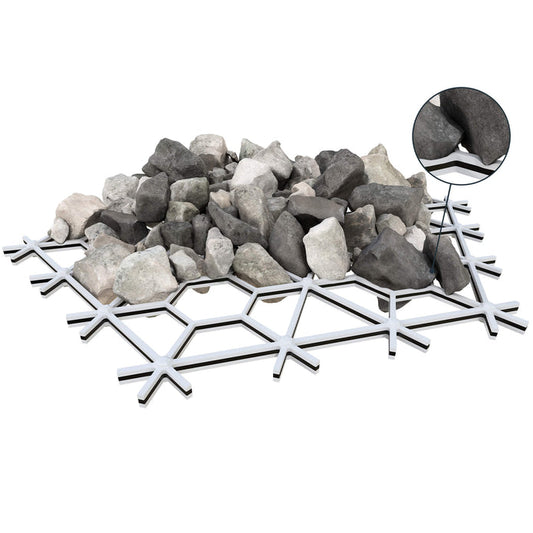
Reinforcement mesh differs from geogrids and cellular systems. Geogrids stabilise unbound aggregates by interlock, while reinforcement mesh is designed for use within materials that set or cure. For this reason, mesh is not used for sub base stabilisation but as part of the structural layer itself.
Correct selection depends on slab thickness, loading and application type. Lighter meshes may be suitable for domestic bases and paths, while heavier meshes are specified for commercial slabs and higher load conditions. Mesh size, wire diameter and placement depth all influence performance.
All reinforcement mesh products must be fully encapsulated within the construction. Adequate concrete cover, correct spacing and secure positioning during the pour are essential to prevent movement and ensure the mesh performs as intended.
This category includes reinforcement mesh suitable for a range of domestic and commercial construction applications where bonded ground reinforcement is required.