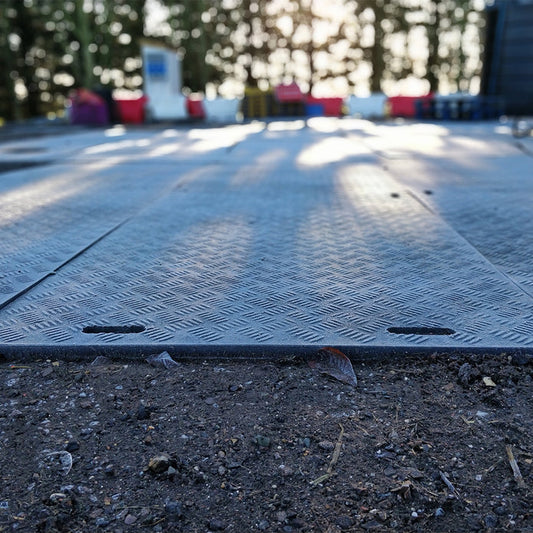
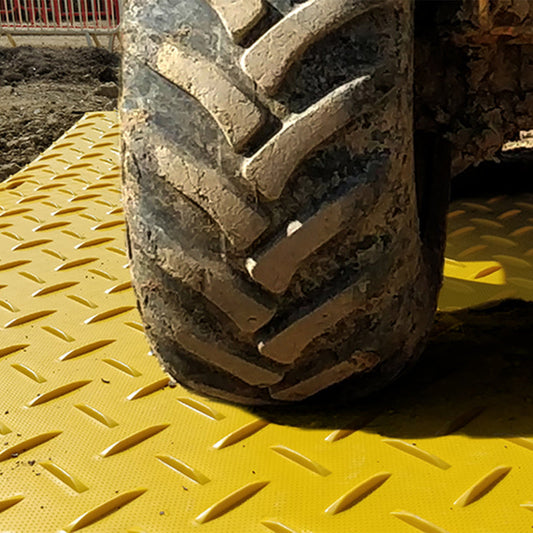
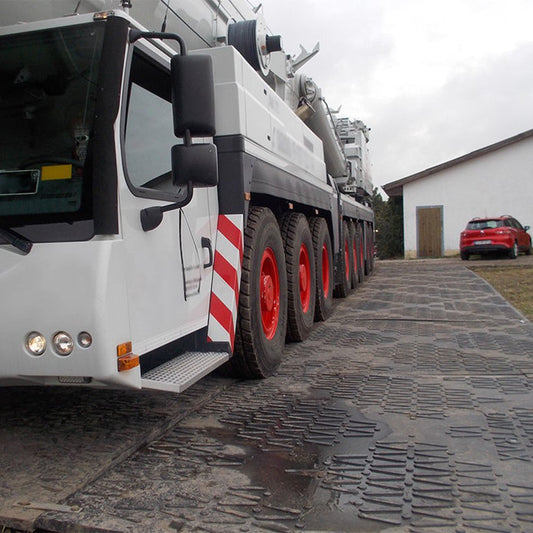
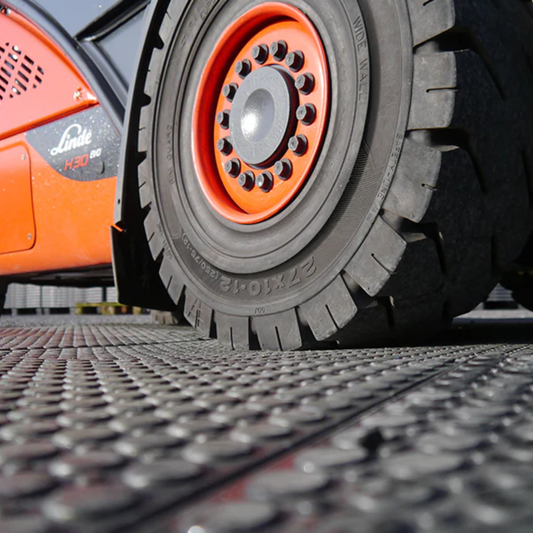
Heavy duty matting is used to create stable access routes, working platforms and temporary roadways over weak, wet or sensitive ground. By spreading loads across a wider area, these systems reduce ground pressure, limit rutting and prevent surface damage caused by vehicles and plant.
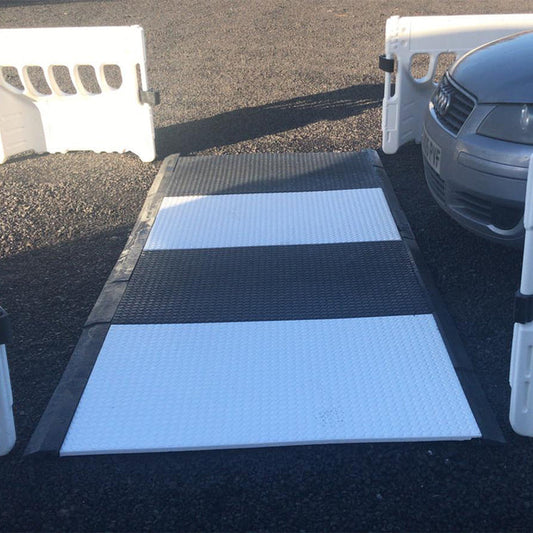
Typical applications include construction access routes, plant haul roads, temporary car parks, utilities maintenance, events and infrastructure works. Heavy duty mats are also used where repeated trafficking is expected but excavation, aggregate build ups or permanent surfacing are not practical.
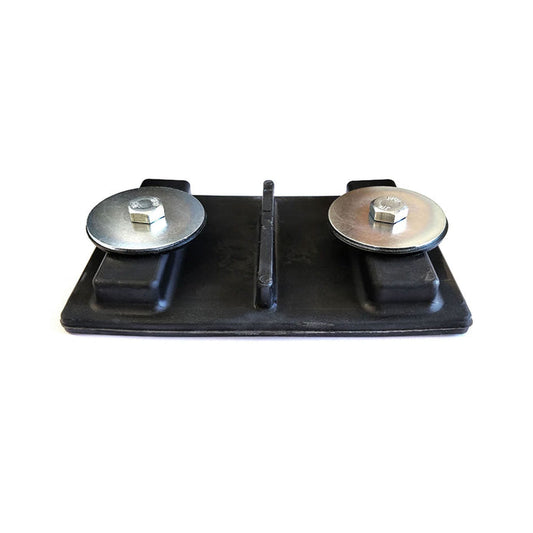
Manufactured from high strength recycled polymers, heavy duty mats are designed to cope with repeated loading from wheeled plant, site vehicles and equipment. Depending on the system, mats may be manually installed or require mechanical handling. Most products connect using interlocking edges, hand hole connectors or strap fixings to create a continuous surface that resists movement under load.
Heavy duty matting is particularly effective where traditional unbound aggregates struggle, such as on clay sub grades, grassed areas or environmentally sensitive sites. Installation is typically fast, with minimal ground preparation, making these systems well suited to temporary works, emergency access or time critical projects.
Correct product selection is essential. Load rating, mat thickness, connection method and ground conditions all influence performance. Lighter heavy duty mats are suitable for pedestrian use and medium vehicles, while thicker panels and roadway systems are required for high axle loads and heavy plant. Steel tracked vehicles are generally unsuitable unless explicitly approved.
This category includes a range of heavy duty matting options to suit temporary access, working platforms and longer term ground protection, allowing you to select the correct system for your site conditions and loading requirements.